

Updated: May 21

Geopolitical
considerations of recent
times have unfortunately
inflicted an amnesia
on the region which
is yet to catch up with
what the people are
already reclaiming and
experiencing afresh.
Tsultrim, a doctor in Sikkim, and also a pious Buddhist, was in Sri Lanka with her mother recently. She shares that the island nation offered a completely different, and refreshing holiday, the shopping and calm adding to the delight of making a pilgrimage which, until less than a decade ago, would have been impossible to even consider given the red tape and costs involved.
In a reverse journey, on a clear morning in Lumbini in Nepal, a pilgrim from Sri Lanka lights a butter lamp beneath a Bodhi tree grown from the same lineage as the one in Bodh Gaya. At around the same time, in the autumn of 2025, a group of motorcycle enthusiasts from West Bengal and a gaggle of sixtyyear- olds who were once school kids in boarding in Kalimpong exchange jokes and compare adventures in a pub in Pokhara. The bikers leave the next day for Mustang, while the Old Boys are marching off on an ABC [Annapurna Base Camp] trek.
Then there is vlog making the rounds of a backpacker from North India hiking through Western Nepal before crossing into India to trace the Ganges downstream. In Patan, one of the erstwhile Kathmandu valley kingdoms, a young sitar maestro from India enthrals an audience of Nepalis and expats with soulful renditions of ragas and then a powerful Shiva
Strotam recital.
These travellers and these experiences are reiterating what history, save the hiccup of recent decades, has known for several millennia - South Asia is a single destination. For instance, in Bodh Gaya, under the Bodhi tree, pilgrims murmur prayers in Sinhala, Burmese, Thai, Nepali, and Hindi.
South Asia — home to some of the world’s oldest civilizations and most enduring cultural traditions — is paradoxically one of the least integrated tourism regions on the planet even though the region shares a common evolutional history. Despite its extraordinary density of heritage, landscapes, and living cultures, it is marketed to the world as a set of isolated national experiences rather than a connected civilizational whole. The result is a tourism story that feels fragmented, cautious, and incomplete.
Promoting South Asia as a common tourist destination is not about erasing borders or ignoring political realities. It is about acknowledging a deeper truth: that the region’s history, geography, and cultural life have always flowed across boundaries, and that tourism—perhaps more than any other sector—has the power to make that continuity visible again.
South Asia comprises India, Pakistan, Bangladesh, Sri Lanka, Nepal, Bhutan, Maldives, and Afghanistan. On a map, they appear neatly divided. On the ground, and across time, those divisions blur, cultures overlap and connections stretch long.
For millennia, traders, monks, poets, armies, and pilgrims moved freely across this landscape. Buddhism spread from the Gangetic plains to the Himalayan foothills and across the sea to Sri Lanka. Sufi saints travelled from Central Asia into the subcontinent, leaving shrines that still draw devotees across borders.
Rivers such as the Indus, the Ganges, and the Brahmaputra ignored political demarcations long before modern states tried to impose them.

Yet contemporary tourism rarely reflects this continuity. A traveller visiting South Asia is encouraged to “do” India or Nepal or Sri Lanka, as if each were a sealed container of culture. What is lost in this approach is the sense of South Asia as a shared story—one in which religions, cuisines, art forms, and languages evolved together.
Globally, tourism is increasingly driven by depth rather than speed. Travelers want immersive experiences: long journeys, layered histories, meaningful encounters. South Asia should be perfectly positioned to meet this demand. Instead, it remains underrepresented in multi-country itineraries, especially when compared to regions like Southeast Asia or Europe.
Part of the problem lies in perception.
Part of the problem lies in perception.
South Asia is often framed internationally through headlines about conflict, overcrowding, or instability. While these realities exist, they obscure the region’s extraordinary cultural wealth and hospitality.
South Asia is often framed internationally through headlines about conflict, overcrowding, or instability. While these realities exist, they obscure the region’s extraordinary cultural wealth and hospitality. A common tourism narrative could help rebalance that image— presenting South Asia not as a zone of perpetual crisis, but as one of the world’s
great travel regions.
Economically, the stakes are high. Tourism supports millions of livelihoods across South Asia, from mountain guides and boatmen to artisans and small homestay owners. A regional approach would encourage visitors to stay longer, travel further, and spend more—benefiting smaller destinations that are currently overshadowed by a handful of global
hotspots.
Some of South Asia’s most compelling travel experiences make little sense when confined within national borders.
Take the Buddhist pilgrimage trail. The life of the Buddha unfolded across what are now Nepal and India, while the faith flourished for centuries in Sri Lanka and beyond. Treating these as separate tourism products fractures a story that is, at heart, transnational. Bangladesh cannot be written out of the Buddhist experience, neither can Pakistan or Afghanistan, just like the Hindu myths mark geographies which know no borders.
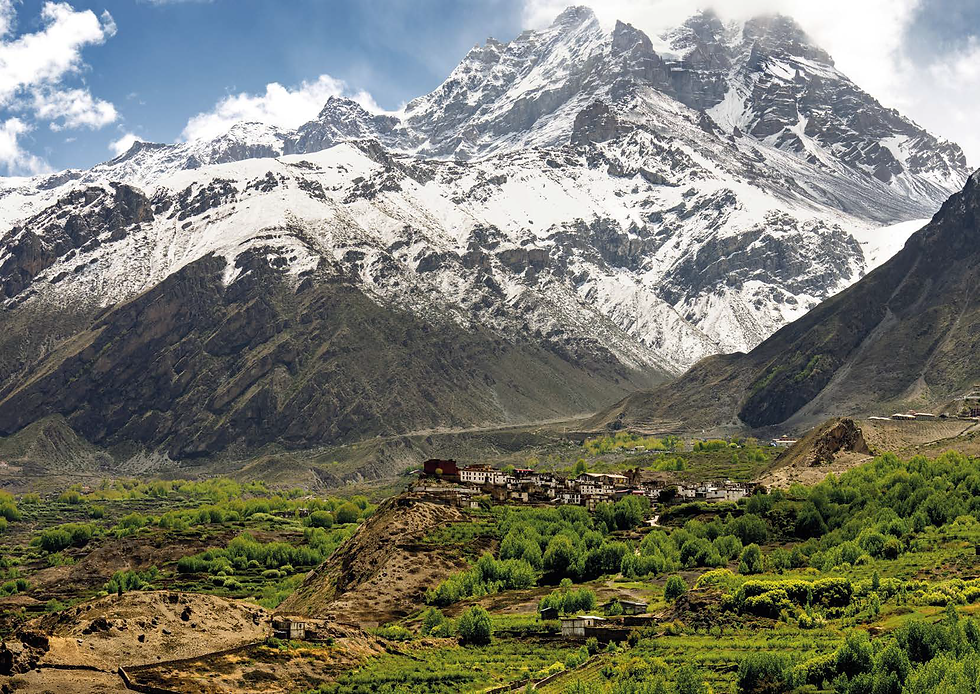
While on geographies, consider the Himalayas. From the high deserts of Ladakh to the valleys of Nepal and the monasteries of Bhutan, the mountain range offers a continuous landscape of spiritual practice, trade, and adaptation.
Yet travellers must navigate a maze of permits, visas, and disconnected infrastructure to experience it as a whole.
Even food tells a regional story. The spices of Sri Lanka, the breads of northern India and Pakistan, the fish curries of Bangladesh, the fermented foods of the eastern Himalayas—these cuisines speak to shared climates, trade routes, and histories that no single national brand can fully contain.
The greatest obstacle to promoting South Asia as a common tourist destination is not a lack of attractions. It is the friction of borders.
Visa regimes within South Asia are among the most restrictive in the world. A traveller can move more easily between continents than between neighbouring South Asian countries. There has been an easing, but not nearly enough. Direct flights are limited, cross-border rail links are few, and overland, which would be the preferred experience, impossible on most borders.
For tourists, this translates into frustration. For local communities, it means missed opportunities. Political realities cannot be wished away. But tourism, precisely because it is civilian and people-centric, offers a rare space where cooperation can begin without demanding grand political settlements. Other regions offer useful lessons. Southeast Asia, despite its own political complexities, has successfully branded itself as a multi-country destination. Travelers move seamlessly from Thailand to Cambodia to Vietnam, often on a single trip. Joint marketing campaigns, improved connectivity, and relative visa openness have transformed the region’s tourism fortunes.
Europe’s experience shows how cultural routes—rather than political units—can anchor tourism. Pilgrimage paths, wine trails, and heritage circuits draw visitors across borders, telling stories that no single country owns.

South Asia does not need to replicate these models exactly. But it can adapt their underlying principle: that collaboration amplifies, rather than diminishes, national tourism identities.
A common South Asian tourism vision does not have to begin with sweeping agreements. It can start with practical, thematic collaborations. Regional tourism circuits—focused on shared heritage, ecology, or spiritual traditions—offer a pragmatic entry point. So do limited visa facilitation measures for pilgrims, cultural groups, or guided tours.
India and China, for instance, despite their many confrontations, allow the Kailash mansarovar pilgrimage, both, through Uttarkahand as well as from distant Sikkim. While it is still early days to start discussing sustainability, it is an important conversation to initiate. South Asia’s natural and cultural assets are fragile. Glaciers are retreating, coastlines are eroding, and heritage sites are under pressure from unchecked development. A common tourism strategy must place sustainability at its core. This means sharing data, coordinating conservation efforts, and learning from one another’s successes and failures. It also means recognizing that environmental damage in one country affects the region as a whole—especially in shared ecosystems like river basins and mountain ranges. Ultimately, promoting South Asia as a common tourist destination is about more than attracting visitors. It is about reshaping how the region sees itself and how it is seen by the world.
Tourism cannot resolve political disputes. But it can soften perceptions, build familiarity, and remind people—both within and outside the region—that South Asia’s differences have always existed alongside deep connections. In a time of rising nationalism and closed borders, choosing to tell a shared story is a quiet but radical act. It affirms that history did not begin with partition lines, and that the future need not be constrained by them. South Asia’s greatest journey is not just the one tourists take across its landscapes. It is the journey the region takes toward recognizing itself—once again—as a place of shared movement, shared memory, and shared possibility.